How to Remove Black Mold From a Shower: Grout, Caulk, Tile and Ceiling
A spot-by-spot method for dark mold on shower grout, caulk, tile and ceilings, what "black mold" actually means, when caulk has to be replaced and the habits that keep the shower clear.
Scrub black mold off shower tile and grout with detergent and water, rinse and dry completely; a diluted bleach solution is optional on hard surfaces. Spots under silicone caulk cannot be scrubbed out, so the caulk has to be replaced. "Black mold" is a color, not a species, per the EPA, and mold returns unless the shower dries after every use.
Key takeaways
"Black mold" is a color, not a species, according to the EPA.
Tile and grout: scrub, rinse, dry; a bleach solution of no more than 1 cup per gallon is optional.
Spots under silicone caulk are inside it: cut the caulk out and replace it.
Ceiling mold over about 10 square feet, or on drywall, is a job for a professional.
A fan and a squeegee after every shower prevent regrowth better than any cleaner.
How to remove black mold from a shower: the short answer
Scrub it off hard surfaces, replace caulk that is moldy inside, and dry the shower after every use.
The dark spots on shower grout, along caulk lines and on the ceiling above the shower are common, and most of them are a cleaning job. The method depends on the spot: tile and grout are hard surfaces you can scrub, silicone caulk can hold growth inside it, and the ceiling may be painted drywall, which is porous.
If you would rather hand the scrubbing to someone else, the bathroom detail work in professional deep cleaning services covers grout, caulk edges, tile and fixtures. Growth inside drywall or behind tile is remediation, a different trade.
What "black mold" means
"Black mold" describes a color, not a type of mold, and color does not tell you how risky it is.
'Black mold' is not a species or specific kind of mold, and neither is 'toxic mold.'
The EPA notes that the media sometimes use the term for a specific mold, Stachybotrys chartarum, but only a lab can identify species. For a shower, the practical questions are the same whatever the color: how large the area is, what material it is on and whether it keeps coming back. The broader difference between these growths is explained in mold vs. mildew.
Spot by spot: what to do
Tile and grout get scrubbed; caulk gets replaced when the spots are inside it; ceilings depend on the material.
Spot
What it is
What to do
Glazed tile
Hard, non-porous
Scrub with detergent and water, rinse, dry
Cement grout lines
Hard but textured
Scrub with a stiff grout brush; reseal once dry
Silicone caulk, spots on the surface
Surface growth
Scrub gently, rinse, dry
Silicone caulk, spots under the surface
Growth inside the caulk
Cut the caulk out, clean and dry the joint, apply new caulk
Ceiling above the shower
Often painted drywall
Small surface spots: wipe and dry; stains that return or larger areas: professional
Shower curtain and liner
Fabric or plastic
Launder per the care label and dry fully
When the spots sit under the surface of the caulk, no cleaner reaches them: the caulk has to be cut out and replaced.
Step by step for tile and grout
Ventilate, scrub with detergent and water, rinse, dry, and reseal grout once it is clean and dry.
01Check the size. Keep to patches smaller than about 10 square feet, the EPA limit for do-it-yourself cleanup.
02Ventilate and protect yourself. Run the exhaust fan or open a window; wear rubber gloves and goggles, and consider an N-95 respirator.
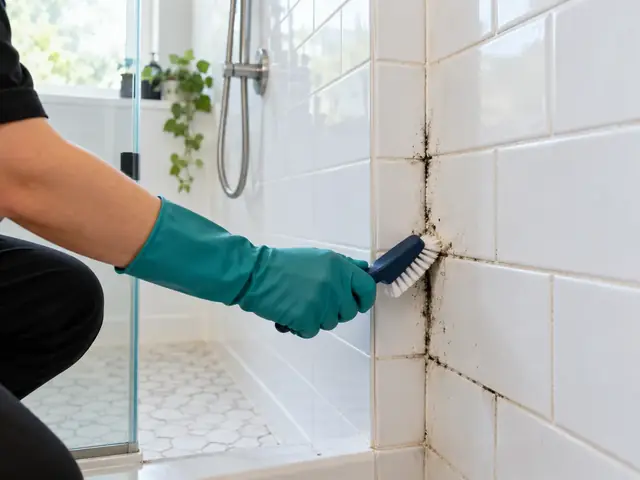
03Scrub with detergent and water. Use a stiff grout brush on the lines and a non-scratch sponge on the tile.
04Optional: use a bleach solution on hard surfaces. No more than 1 cup of bleach per gallon of water, never mixed with other cleaners. The details are in does bleach kill mold.
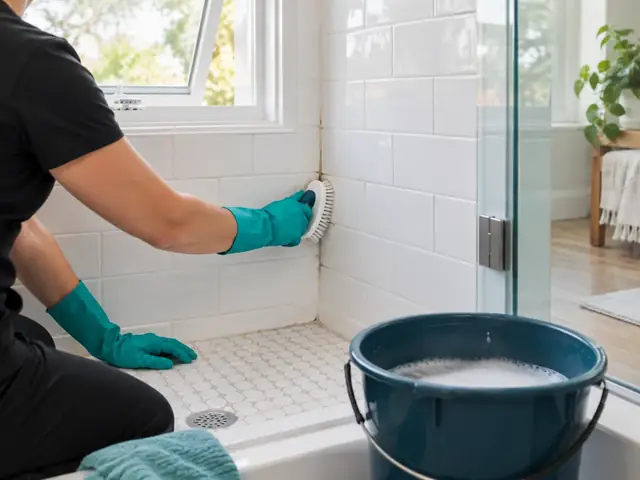
05Rinse and dry completely. Rinse the loosened growth away and dry the tile and grout with a towel or squeegee.
06Reseal the grout once it is dry. Sealed grout absorbs less water, so it stays clean longer.
Rather have a pro handle it?
Get matched with a local deep cleaning pro who serves your ZIP code. Free to request, no obligation.
When the spots are under the surface of the caulk, removing and replacing the caulk is the only fix.
01Cut the old caulk out with a utility knife or caulk removal tool, without scratching the tub or tile.
02Clean the joint with detergent and water and remove every bit of old caulk.
03Let the joint dry completely before applying anything new.
04Apply a new bead of silicone caulk made for kitchens and baths, and let it cure fully before using the shower.
New caulk only lasts if the joint is clean and completely dry before the bead goes on.
Mold on the shower ceiling
Wipe small surface spots and dry the ceiling; call a professional when stains return or cover a large area.
Bathroom ceilings are often painted drywall, which is porous. Small surface spots can be wiped with detergent and water and dried. Stains that come back after cleaning point to growth in the drywall itself. The EPA also advises not to paint over the problem: "Do not paint or caulk moldy surfaces," because "paint applied over moldy surfaces is likely to peel."
How to keep black mold out of the shower
Remove the water after every shower and keep the room's humidity down.
Run the exhaust fan during showers and for a while after.
Squeegee the glass and tile, and wipe the tub edge and caulk line.
Spread the curtain out so the hem dries.
Fix dripping shower heads and faucets.
Keep humidity no higher than 50%, as the CDC advises.
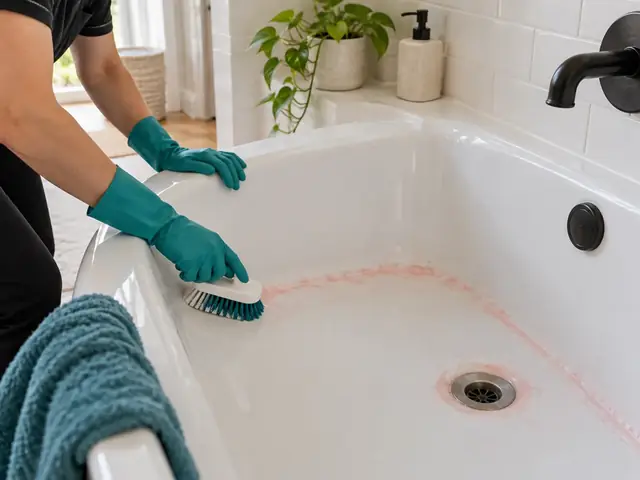
The same habits stop the pink film in showers, which is usually a bacterium rather than mold, as explained in pink mold in the shower.
Keep it from coming back
Regular visits catch moisture, grime and buildup early. Set up a weekly, biweekly or monthly plan with a local pro.
Call a remediation specialist for areas over about 10 square feet, mold on drywall that returns, or growth behind the tile.
Soft or loose tiles, grout that keeps cracking or a ceiling stain that grows point to water getting behind the surface. That is remediation and repair, not cleaning. For regular grout, caulk and fixture detail work, a deep clean resets the shower.
When the job is bigger than a spray bottle
A local deep cleaning pro brings the right products, protection and time for the whole area, and tells you when a specialist is needed.
Scrub tile and grout with detergent and water, rinse and dry completely; a bleach solution of no more than 1 cup per gallon is optional on hard surfaces. Replace silicone caulk that has spots under its surface, and dry the shower after every use.
Is black mold in the shower dangerous?
The EPA says "black mold" is not a species, so color does not tell you the risk. Mold can cause allergic reactions and asthma attacks in sensitive people, so clean it promptly and talk to a doctor if anyone has symptoms.
Why does black mold keep coming back on my caulk?
Spots under the surface of silicone caulk are inside it, where no cleaner reaches. The caulk has to be cut out, the joint cleaned and dried, and a new bead applied.
Can I paint over mold on the bathroom ceiling?
No. The EPA says not to paint or caulk moldy surfaces and notes that paint applied over moldy surfaces is likely to peel. Clean small surface spots and call a professional if stains return.
What is the best way to prevent shower mold?
Remove the water: run the fan, squeegee the glass and tile, spread the curtain to dry, fix drips and keep humidity no higher than 50%, as the CDC advises.
Can I use vinegar on black mold in the shower?
Vinegar can help on small patches of hard surfaces, but in lab testing it inhibited only one of two common indoor molds and it etches natural stone. Never combine it with bleach.
The bottom line
Most black mold in a shower is a cleaning job: scrub tile and grout, rinse and dry, and replace caulk that is moldy inside. Leave ceilings with returning stains, large areas and growth behind tile to a professional, and dry the shower after every use so it stays clear.
SEO consultant and editor of the CleanLocalPros guides
Consultor SEO Wenderson writes the CleanLocalPros house cleaning guides from search data, official sources and the questions homeowners send us, and the editorial team reviews every guide before it is published. We do not accept payment for recommendations. More about the author · Our editorial standards.
Scope and pricing vary by pro, state and city. This guide explains common practice; confirm the details with the pro you hire.
The pink or red film in showers, tubs and toilets is usually a bacterium, not mold. What an extension service says it is, the cleaning method, and the habits that stop it returning.
What chlorine bleach does to mold, the dilution the CDC gives, why the EPA does not recommend it as a routine step, where bleach damages surfaces and when mold needs a professional.