
How to Clean Grout: Methods That Actually Work
Grout is porous, so dirt and soap soak in. Here are the methods to try, gentlest first, and the mistakes that damage grout and tile.
Learn the grout cleaning methodsAn evidence-based answer: what vinegar does to mold, the lab result most guides leave out, a safe step-by-step method, the surfaces vinegar damages and when mold is a job for a pro.
 Consultor SEO WendersonSEO consultant and editor of the CleanLocalPros guides12 min readReviewed by the CleanLocalPros editorial team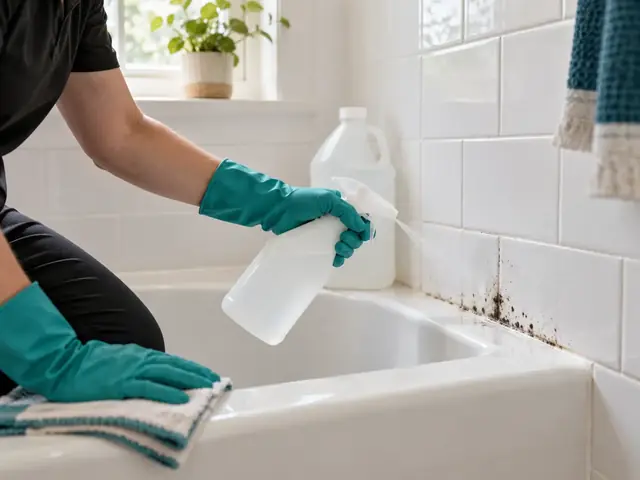
Sometimes. White vinegar is a mild acid, and in a published lab test a 4% vinegar stopped the growth of one common indoor mold, Penicillium chrysogenum, but not another, Aspergillus fumigatus. Use it only on small patches of mold on hard surfaces, then scrub the mold off and dry the area: the EPA says killing mold is not enough.
Vinegar kills or stops some molds, not all of them, and it never replaces scrubbing.
Household white vinegar is diluted acetic acid, a mild acid. In a peer-reviewed lab test, vinegar at 4.0 to 4.2% acetic acid stopped the growth of Penicillium chrysogenum but had no effect on Aspergillus fumigatus. Both are molds commonly found in indoor air, and you cannot tell them apart by eye.
That makes vinegar a reasonable choice for a small patch of mold on a hard surface, like glazed tile, glass or a sealed tub, as long as you follow it with scrubbing, a detergent wipe and complete drying. It is the wrong tool for large areas, for porous materials like drywall and carpet, and for mold that keeps coming back because of a moisture problem.
If you would rather hand off the scrubbing, professional deep cleaning services cover the buildup that feeds bathroom mildew: soap scum, grout lines, caulk edges and fixtures.
Vinegar works on mold as an acid: it can inhibit some fungi, but the effect depends on the species.
Mold is a group of fungi that grows as a fuzzy or slimy film wherever moisture, a food source and still air meet. Acetic acid lowers the pH on the surface, which some molds tolerate and others do not. That is why the honest answer to "does vinegar kill mold" is "some of it".
A precise percentage of mold species killed by vinegar is widely repeated online, usually with no link to a study. This guide sticks to published evidence.
In a study published in the International Journal of Environmental Research and Public Health, researchers tested five cleaning agents against two molds isolated from indoor air samples, using a disc-diffusion growth test.
| Agent tested | *Aspergillus fumigatus | *Penicillium chrysogenum |
|---|---|---|
| Tea tree oil (liquid and vapor) | Growth inhibited (strongest effect) | Growth inhibited (strongest effect) |
| Two industrial disinfectants | Growth inhibited | Growth inhibited |
| Vinegar, 4.0 to 4.2% acetic acid | No inhibition | Growth inhibited |
| 70% ethanol | No inhibition | No inhibition |
Vinegar (4.0%-4.2% acetic acid) was found to only inhibit the growth of P. chrysogenum, while 70% ethanol was found to have no inhibitory effect on the growth of either fungi.
A lab dish is not a shower wall, and the study did not test chlorine bleach or hydrogen peroxide. Still, the result settles one point: vinegar is not a universal mold killer. Without a lab test you cannot know which species is on your grout, so treat vinegar as one step in cleaning a small patch, never as proof the problem is gone.
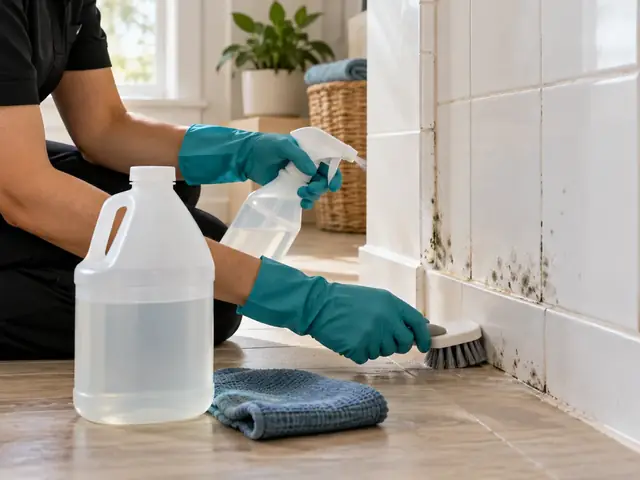
Dead mold still matters: the EPA says it can cause allergic reactions, so it has to be physically removed.
Many guides stop at "spray and let it sit". The official guidance goes further.
Dead mold may still cause allergic reactions in some people, so it is not enough to simply kill the mold, it must also be removed.
The EPA's own method for hard surfaces does not require any mold killer at all: "Scrub mold off hard surfaces with detergent and water, and dry completely." Vinegar can help loosen growth and deal with the species it affects, but the scrubbing, the detergent wipe and the drying are what clear the surface.
Terms used in this guide
Use undiluted white vinegar on a small patch, let it work, scrub, wipe with detergent and dry.
Get matched with a local deep cleaning pro who serves your ZIP code. Free to request, no obligation.
Vinegar is safe on glazed tile and glass, risky on cement grout, and wrong for natural stone and porous materials.
| Surface | Vinegar on mold? | Why, and what to use instead |
|---|---|---|
| Glazed ceramic or porcelain tile | Yes | The glaze resists acid. Rinse after scrubbing. |
| Glass shower doors | Yes | It also loosens hard-water film. Squeegee dry after. |
| Fiberglass or acrylic tub and shower | Yes, gently | Acid is fine; abrasive pads scratch. Use a soft sponge. |
| Cement-based grout | With care | Repeated acid can wear cement grout. Rinse well and reseal once it is dry. |
| Marble, limestone, travertine | No | These stones are calcium carbonate, and acid etches them. Use a pH-neutral stone cleaner. |
| Painted drywall | Surface only | If stains return, the mold is in the paper facing. That is a porous-material job. |
| Unfinished wood | Limited | Wood is porous and mold can grow into it. Deep growth needs a professional. |
| Carpet, ceiling tiles, insulation | No | Porous materials may have to be thrown away, per the EPA. |
The EPA is direct about soft, absorbent materials: "Absorbent or porous materials, such as ceiling tiles and carpet, may have to be thrown away if they become moldy." Spraying vinegar on moldy drywall or carpet can lighten the stain while the growth continues inside.
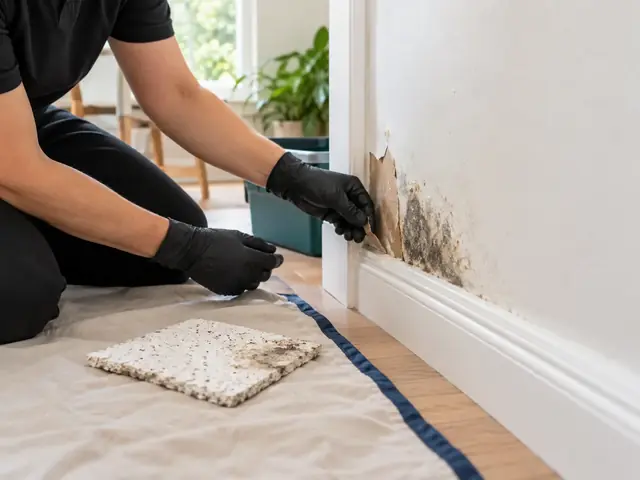
For grout specifically, the method and tools are covered step by step in the next guide.
No household product is a guaranteed mold killer; the options differ in what they do and what they risk.
| Option | What it does on mold | Limits and safety |
|---|---|---|
| Detergent and water | Removes mold physically. This is the EPA method for hard surfaces. | Needs scrubbing and complete drying. |
| White vinegar | Inhibited Penicillium but not Aspergillus in lab testing | Etches stone. Never mix with bleach. |
| Chlorine bleach solution | Listed by the CDC for hard surfaces, at no more than 1 cup of bleach per gallon of water | Fumes; never mix with ammonia, vinegar or other cleaners. Not for porous materials. |
| Hydrogen peroxide | Not tested in the study above | Test on colored surfaces; it can lighten them. |
| Tea tree oil | Strongest inhibition of both molds in the lab test | A lab result on growth plates, not a tested household method. |
This is the one rule with no exceptions. Mixing an acid like vinegar with chlorine bleach releases toxic gas.
For example, mixing bleach with acids (such as vinegar) or ammonia releases life-threatening toxic fumes.
Give vinegar about an hour on the surface, keep it wet, then scrub; the scrubbing does the removal.
There is no official contact time for household vinegar on mold, and the lab test above measured growth on plates, not minutes on a wall. The common advice of about one hour gives the acid time to act and to loosen the growth before you scrub. Leaving it longer will not make up for skipping the scrub, the detergent wipe and the drying.
You can let vinegar sit for a while, but you should not leave mold in place: dead or alive, it has to come off.
Spraying and walking away leaves the mold on the surface, where the EPA notes it can still trigger allergic reactions, and it leaves any species vinegar does not affect untouched. The vinegar smell fades once the surface dries. On grout and near stone, rinse the vinegar off after scrubbing so the acid does not keep working on the surface.
Mold returns when the moisture that fed it is still there; cleaning treats the result, not the cause.
Bathrooms, window sills and basements get mold because water sits on or inside materials. The fixes are about moisture, not stronger cleaners:
Regular cleaning also keeps soap scum, the film mildew feeds on, from building up in the first place. The deep cleaning checklist shows the bathroom detail work that keeps grout and caulk clear, and vinegar's other bathroom job is covered in how to remove hard water stains.
Regular visits catch moisture, grime and buildup early. Set up a weekly, biweekly or monthly plan with a local pro.
Call a remediation specialist for large areas, porous materials, water damage or health concerns; call a cleaner for the buildup around them.
Answer these in order
A house cleaning or deep cleaning pro scrubs soap scum, mildew film and buildup on tile, grout, glass, caulk edges and fixtures, and leaves the room dry. Mold remediation is a different trade: it involves containment, removal of damaged materials and fixing the moisture source, and it is not part of a cleaning service. A good cleaner will tell you when a spot looks like a remediation job.
If anyone in the home has asthma, allergies or a weakened immune system, talk to a doctor before cleaning mold yourself, and let someone else do the work.
A local deep cleaning pro brings the right products, protection and time for the whole area, and tells you when a specialist is needed.
There is no official contact time for household vinegar on mold. Most advice suggests leaving undiluted white vinegar on the area for about an hour, keeping it wet, then scrubbing. The scrubbing, a detergent wipe and complete drying are what actually clear the surface.
In a peer-reviewed lab test, vinegar at 4.0 to 4.2% acetic acid did not inhibit Aspergillus fumigatus, a mold common in indoor air, while it did inhibit Penicillium chrysogenum. Because you cannot identify species by eye, never assume vinegar killed everything.
No. The EPA says dead mold can still cause allergic reactions, so it must be removed, not only killed. Spray, let it sit, then scrub it off, wipe with detergent and water, and dry the surface completely.
There is no head-to-head result to point to: the lab study that tested vinegar did not test hydrogen peroxide. Both are used on small patches of mold on hard surfaces, and neither replaces scrubbing, drying and fixing the moisture that caused the growth.
The CDC lists a bleach solution of no more than 1 cup per gallon of water for hard surfaces, while vinegar inhibited only one of two molds in lab testing. Neither works on porous materials. Never use them together: mixing bleach with an acid like vinegar releases toxic fumes.
Do not use vinegar on marble, limestone or travertine, which are calcium carbonate stones that acid etches. Use it with care on cement-based grout, and do not rely on it for porous materials such as drywall, carpet, ceiling tiles or unfinished wood.
It may lighten the stain, but drywall is porous and mold grows into its paper facing, where a spray cannot reach. The EPA notes that porous materials may have to be thrown away once they are moldy. A patch that returns after cleaning needs a professional.
Mildew is the everyday name for mold growing flat on a surface, often as gray, white or light patches in damp bathrooms. It is still a fungus. On hard surfaces it is cleaned the same way: scrub, wipe with detergent and water, and dry.
Vinegar is a useful first step on a small patch of mold on a hard surface, but it is selective: in lab testing it stopped one common indoor mold and not another. Scrub the mold off, dry the surface, fix the moisture, and leave large areas and porous materials to a professional. For the bathroom buildup that feeds mildew, a deep clean resets tile, grout and glass.
Get My Deep Cleaning QuoteAbout the author
Consultor SEO WendersonSEO consultant and editor of the CleanLocalPros guides
Consultor SEO Wenderson writes the CleanLocalPros house cleaning guides from search data, official sources and the questions homeowners send us, and the editorial team reviews every guide before it is published. We do not accept payment for recommendations. More about the author · Our editorial standards.
Scope and pricing vary by pro, state and city. This guide explains common practice; confirm the details with the pro you hire.
Keep reading
Grout is porous, so dirt and soap soak in. Here are the methods to try, gentlest first, and the mistakes that damage grout and tile.
Learn the grout cleaning methodsWhy hard water leaves white spots and crust, how to remove them safely by surface, and the habits that stop them coming back.
Remove hard-water stainsA complete, printable deep cleaning checklist for every room, with the tasks usually included, the common add-ons and a five-minute walkthrough.
Use the deep cleaning checklistSend one free request and get matched with a local deep cleaning pro who serves your ZIP code.

