Pink Mold in the Shower: What It Really Is and How to Get Rid of It
The pink or red film in showers, tubs and toilets is usually a bacterium, not mold. What an extension service says it is, the cleaning method, and the habits that stop it returning.
The pink or reddish film in showers, tubs and toilets is usually not mold. North Dakota State University Extension identifies it as a bacterium, Serratia marcescens, which grows where water sits and soap residue builds up. Scrub it off with a brush and a household cleaner, follow with a bleach solution, then keep surfaces dry so it does not return.
Key takeaways
The pink film is usually a bacterium, Serratia marcescens, not a mold.
It grows where water sits and soap or fatty residue builds up.
Scrub it off, then use a bleach solution left on for 10 to 20 minutes, the extension service method.
Wipe and dry tubs and sinks after use to keep it from coming back.
Never mix bleach with other cleaners; rinse and ventilate.
What is the pink "mold" in the shower?
It is usually a bacterium called Serratia marcescens, not a mold.
The pink, orange or reddish ring that shows up on grout, the tub floor, shower curtain hems and inside the toilet looks like mold, and most people call it pink mold. An extension specialist at North Dakota State University identifies it differently.
It is bacteria known as Serratia marcescens, according to Roxanne Johnson, North Dakota State University Extension Service water quality associate.
It still needs the same attention as mildew: regular scrubbing and a dry bathroom. Keeping grout, caulk and fixtures free of this film is part of the bathroom detail work in professional deep cleaning services.
Why it grows in showers, tubs and toilets
It thrives where water sits long enough for chlorine to fade and soap or fatty residue collects.
NDSU explains that the bacteria survive "because the water sits for a period of time, with the chlorine dissipating as it stands." Showers give it everything it needs: water left on surfaces after bathing, soap and shampoo residue, and caulk lines and grout that stay damp.
Where it shows up
Why there
Tub floor and shower pan
Water pools after every shower
Grout lines and caulk edges
Stay damp and hold soap residue
Shower curtain hem
Folds trap water
Toilet bowl rim and tank
Water stands between flushes
Sink drain and overflow
Moist, with soap residue
Pink film vs. mold vs. mildew
Pink film is usually bacteria; mildew is mold growing flat; both need the same moisture control.
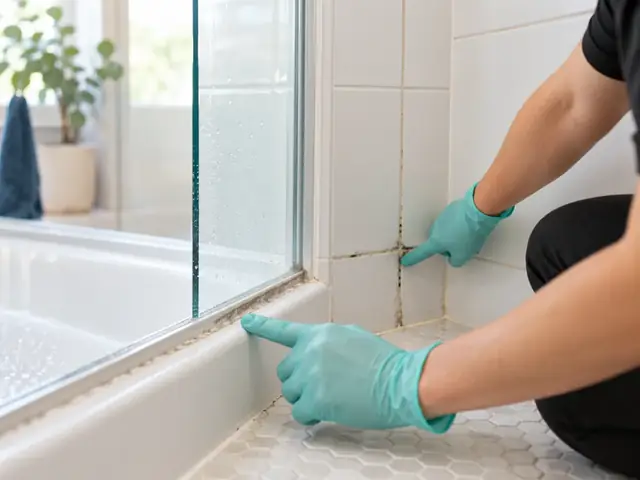
A pink or red film that wipes off easily and returns in wet spots points to Serratia marcescens. Black, gray or white spots on grout and caulk are more likely mold or mildew; the difference is explained in mold vs. mildew. Either way, the fix is the same pattern: scrub, disinfect where appropriate, and dry.
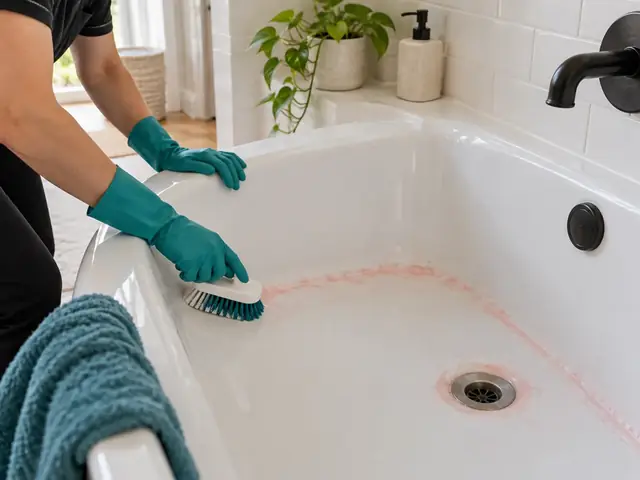
The pink ring forms where water pools and soap residue collects: the tub edge, the grout line and around the drain.
How to remove pink mold from the shower
Scrub with a household cleaner, then disinfect with a bleach solution left on for 10 to 20 minutes, rinse and dry.
01Ventilate and protect yourself. Open a window or run the fan, and wear rubber gloves and goggles.
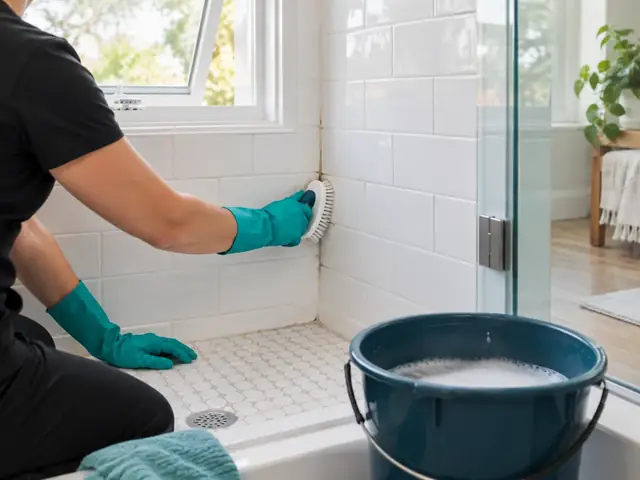
02Scrub the film off. Use a brush and a household cleaner on the tub, grout and caulk edges.
03Rinse. Remove the loosened film and cleaner residue.
04Disinfect with a bleach solution. NDSU advises a strong chlorine bleach solution, "leaving the bleach in contact with the surfaces for 10 to 20 minutes to disinfect the area." Keep to the CDC maximum of 1 cup of bleach per gallon of water.
05Rinse again and dry. Rinse off the bleach and dry the surfaces with a towel or squeegee.
06Wash the curtain and bath mat. Launder them according to the care label and dry them fully.
Inside the toilet tank
For a pink ring in the toilet, NDSU suggests adding a quarter cup of bleach to the toilet tank, letting it sit for 15 to 20 minutes and then flushing the tank a few times.
Rather have a pro handle it?
Get matched with a local deep cleaning pro who serves your ZIP code. Free to request, no obligation.
Dry surfaces after use and keep soap residue from building up.
NDSU Extension's advice for prevention is to "wipe down and dry all sinks and bathtubs after using them, and use a cleaning solution that contains bleach."
Squeegee glass and wipe the tub floor after the last shower of the day.
Run the exhaust fan during and after showers.
Hang the curtain spread out so the hem can dry.
Clean grout and caulk regularly, before residue builds up.
Keep bathroom humidity down; the CDC advises no higher than 50% indoors.
A one-minute wipe-down after the last shower takes away the standing water the pink film needs.
Keep it from coming back
Regular visits catch moisture, grime and buildup early. Set up a weekly, biweekly or monthly plan with a local pro.
Call a cleaner for recurring buildup; call a plumber or remediation specialist when water damage is behind it.
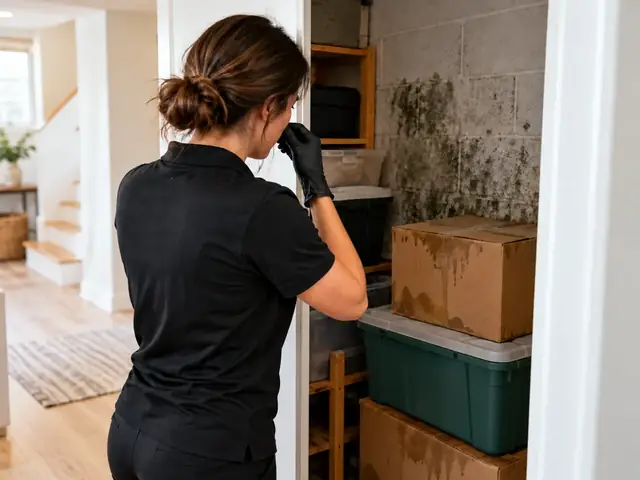
Pink film on surfaces is routine cleaning. If it keeps returning because of a leak, or if you also see mold on drywall or ceilings, the problem is moisture that cleaning alone will not fix. For bathroom detail work on tile, grout, caulk edges and fixtures, a deep clean is the right service.
When the job is bigger than a spray bottle
A local deep cleaning pro brings the right products, protection and time for the whole area, and tells you when a specialist is needed.
It is usually not mold. NDSU Extension identifies the pink or red film in tubs, showers and toilets as a bacterium, Serratia marcescens, which grows where water sits and soap residue builds up.
Is pink mold harmful?
The pink film is a bacterium that grows on damp bathroom surfaces. Keep it cleaned off with regular scrubbing and a bleach solution on hard surfaces, and talk to a doctor if anyone in the home has a weakened immune system.
What kills pink mold in the shower?
Scrub with a brush and a household cleaner, then use a bleach solution left on the surfaces for 10 to 20 minutes, as NDSU Extension advises. Rinse and dry. Keep to no more than 1 cup of bleach per gallon of water.
Why does pink mold keep coming back?
Because the conditions stay: water left on surfaces and soap residue. Wiping and drying the tub and sink after use, running the fan and cleaning grout regularly remove what it needs.
How do I get pink mold out of the toilet?
NDSU Extension suggests adding a quarter cup of bleach to the toilet tank, letting it sit for 15 to 20 minutes and flushing a few times, then scrubbing the bowl.
Does vinegar kill pink mold?
The extension guidance for the pink film uses a household cleaner followed by a bleach solution. Vinegar is not part of that method, and it must never be mixed with bleach.
The bottom line
The pink film in showers and toilets is usually the bacterium Serratia marcescens, not mold. Scrub it off, disinfect with a bleach solution for 10 to 20 minutes, rinse and dry, then keep surfaces dry after use. For bathroom detail work, a deep clean resets tile, grout and caulk edges.
SEO consultant and editor of the CleanLocalPros guides
Consultor SEO Wenderson writes the CleanLocalPros house cleaning guides from search data, official sources and the questions homeowners send us, and the editorial team reviews every guide before it is published. We do not accept payment for recommendations. More about the author · Our editorial standards.
Scope and pricing vary by pro, state and city. This guide explains common practice; confirm the details with the pro you hire.
What chlorine bleach does to mold, the dilution the CDC gives, why the EPA does not recommend it as a routine step, where bleach damages surfaces and when mold needs a professional.
Mildew is the everyday word for mold that grows flat on a surface. How to tell it from mold growing into a material, why color does not tell you much, and how to clean each.
Why mold smells musty, what the EPA says a moldy odor means, where hidden mold usually is, and how to remove the smell for good instead of covering it.