Does Bleach Kill Mold? When It Works, When It Does Not and How to Use It Safely
What chlorine bleach does to mold, the dilution the CDC gives, why the EPA does not recommend it as a routine step, where bleach damages surfaces and when mold needs a professional.
On hard, non-porous surfaces, yes: the CDC lists a bleach solution of no more than 1 cup of bleach per gallon of water for cleaning mold. But the EPA does not recommend killing mold with bleach as a routine step, because dead mold still has to be scrubbed off and the moisture fixed. Bleach is the wrong tool for drywall, carpet and other porous materials.
Key takeaways
The CDC lists a bleach solution of no more than 1 cup per gallon of water for mold on hard surfaces.
The EPA says a mold-killing chemical such as bleach is not recommended as a routine practice; scrubbing and drying are what remove mold.
Never mix bleach with ammonia, vinegar or other cleaners: the mixtures release toxic fumes.
Bleach does not rescue porous materials: moldy drywall, carpet or ceiling tiles may have to be replaced.
Over about 10 square feet, the EPA says the job is no longer a do-it-yourself cleanup.
Does bleach kill mold? The short answer
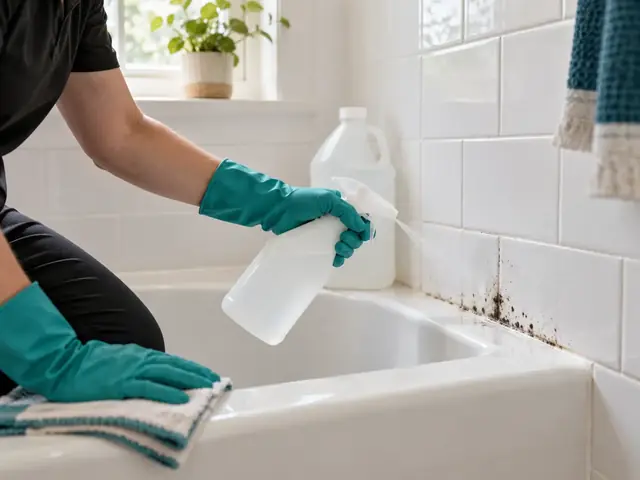
Bleach can kill mold on hard, non-porous surfaces, but it is rarely the most important step.
Household chlorine bleach is a solution of sodium hypochlorite, a strong oxidizer. On glazed tile, a tub or glass, a diluted bleach solution can kill surface mold and lighten the stain it leaves. The CDC lists it among the options for cleaning mold off hard surfaces.
The catch is what official guidance puts first. The EPA does not recommend a mold-killing chemical as a routine part of cleanup, because killing mold is not the same as removing it, and because mold grows back wherever the moisture problem stays. If you want the scrubbing done for you, professional deep cleaning services cover the bathroom buildup that feeds mildew, while mold growth inside materials is a job for a remediation company.
This guide sits next to our look at a milder option, does vinegar kill mold, which covers the lab evidence on vinegar.
What official guidance says about bleach and mold
The CDC allows a diluted bleach solution on hard surfaces; the EPA does not recommend biocides as a routine step.
The two agencies are not contradicting each other. They answer different questions: the CDC tells you how to use bleach safely if you choose it, and the EPA tells you whether you need it at all.
The use of a chemical or biocide that kills organisms such as mold (chlorine bleach, for example) is not recommended as a routine practice during mold cleanup.
The EPA's reason appears a few lines earlier in the same guide: "Dead mold may still cause allergic reactions in some people, so it is not enough to simply kill the mold, it must also be removed." Its method for hard surfaces is scrubbing with detergent and water, then drying completely.
Source
What it says about bleach
CDC
Mold can be removed from hard surfaces with household products, soap and water, or a bleach solution of no more than 1 cup of household laundry bleach in 1 gallon of water.
EPA
A biocide such as chlorine bleach is not recommended as a routine practice; if you use one, ventilate and exhaust the air outdoors.
Both
Never mix bleach with ammonia or other cleaners.
How to use bleach on mold safely, step by step
Dilute it, ventilate, scrub the mold off, rinse and dry: in that order, and never mixed with anything else.
01Confirm the job is small and the surface is hard. Keep to less than about 10 square feet on tile, a tub, glass or sealed fiberglass. Porous materials are covered further down.
02Ventilate and protect yourself. Open windows and doors, and wear rubber gloves and goggles, as the CDC advises. The EPA suggests considering an N-95 respirator.
03Mix the solution fresh. Use no more than 1 cup of household laundry bleach in 1 gallon of water, and nothing else in the bucket.
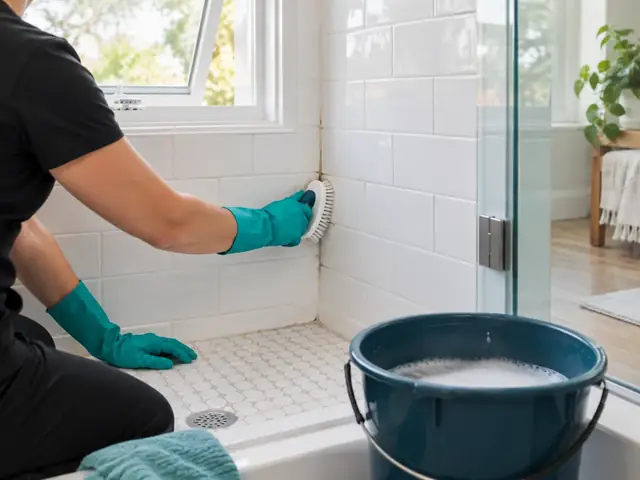
04Apply and scrub. Wet the moldy area and scrub the growth off with a non-scratch brush or sponge. Follow the contact time on the bleach label.
05Rinse with clean water. Remove the bleach residue so it does not keep acting on grout, metal or nearby fabrics.
06Dry completely. Run the exhaust fan or a fan until the surface and the room are dry.
Mix no more than 1 cup of bleach per gallon of water, in a bucket that holds nothing else, with the window open or the fan running.
Rather have a pro handle it?
Get matched with a local deep cleaning pro who serves your ZIP code. Free to request, no obligation.
Bleach is for sealed, colorfast, hard surfaces; it can fade, corrode or fail on the rest.
Surface
Bleach solution on mold?
Why, and what to use instead
Glazed ceramic or porcelain tile
Yes
Hard and non-porous. Rinse after scrubbing.
Tub, shower pan, glass
Yes
Rinse well and dry with a squeegee or towel.
White cement grout
With care
Rinse off completely; colored grout can fade, so test a hidden spot.
Metal fixtures and drains
Brief contact only
Bleach is corrosive to some metals and finishes. Rinse right away.
Colored fabrics, shower curtains
Check the care label
Bleach removes color. Some plastic liners can be machine washed.
Drywall, ceiling tiles, carpet
No
Porous materials may have to be thrown away once moldy, per the EPA.
Unfinished wood
No
Mold can grow into wood; deep growth needs a professional.
A popular claim, checked
You will often read that bleach "only whitens" mold on porous surfaces. The official guidance makes the point more simply: once drywall, carpet or ceiling tiles are moldy, the fix is usually removal, not a stronger spray.
On tile and glass, the rinse and the drying matter as much as the bleach: residue left behind keeps working on grout and metal.
Bleach vs. vinegar vs. detergent
Each option has a place; none of them replaces scrubbing, drying and fixing the moisture.
Option
What it does on mold
Limits
Detergent and water
Removes mold physically; the EPA method for hard surfaces
Needs scrubbing and complete drying
Bleach solution
Kills surface mold and lightens stains on hard surfaces
Fumes, fading, corrosion; not for porous materials
White vinegar
Inhibited one common indoor mold but not another in lab testing
Etches stone; never mix with bleach
The vinegar result comes from a peer-reviewed lab test, explained step by step in does vinegar kill mold.
Never mix bleach with other cleaners
Bleach plus ammonia or plus an acid such as vinegar releases toxic gas; use one product at a time.
For example, mixing bleach with acids (such as vinegar) or ammonia releases life-threatening toxic fumes.
The CDC puts it in one line: "Never mix bleach with ammonia or other cleaners. This will produce a poisonous gas." Many glass cleaners and some multi-surface sprays contain ammonia, so read labels before you clean the same area.
Why mold comes back after bleach
Mold returns wherever moisture stays; bleach treats the surface, not the cause.
The EPA is plain about the cause: none of the many types of mold "will grow without water or moisture." After any cleanup:
Dry water-damaged areas and items within 24 to 48 hours, as the EPA advises.
Run the bathroom fan during and after showers, and squeegee glass and tile.
Fix drips and leaks at the source.
Keep indoor humidity low: the CDC says no higher than 50%, and the EPA recommends below 60%, ideally 30 to 50%.
Keep it from coming back
Regular visits catch moisture, grime and buildup early. Set up a weekly, biweekly or monthly plan with a local pro.
Does it return in the same spot after cleaning?There is a moisture source to find.See why mold comes back
Is it light mildew or soap scum on tile, glass and grout?This is routine bathroom cleaning.Compare deep cleaning scope
What a cleaning pro does, and what remediation is
A house or deep cleaning pro scrubs mildew film and soap scum from tile, grout, glass and fixtures and leaves the room dry. Mold remediation is a separate trade that contains the area, removes damaged materials and deals with the moisture source. If anyone at home has asthma or a weakened immune system, talk to a doctor before cleaning mold yourself.
When the job is bigger than a spray bottle
A local deep cleaning pro brings the right products, protection and time for the whole area, and tells you when a specialist is needed.
The CDC says to use no more than 1 cup of household laundry bleach in 1 gallon of water, on hard surfaces only, with the area ventilated and nothing else mixed in.
Does bleach kill black mold?
"Black mold" is not a species, according to the EPA; it is a color some molds show. On a hard surface, a diluted bleach solution can kill surface growth of any color, but the mold still has to be scrubbed off and the moisture fixed.
Does bleach kill mold on drywall?
Drywall is porous, and the EPA notes that porous materials may have to be thrown away once they are moldy. Bleach can lighten the stain without fixing the problem, so a patch on drywall that keeps returning needs a professional.
Is it better to use bleach or vinegar on mold?
On hard surfaces, the EPA method is detergent and water; bleach and vinegar are optional extras. A bleach solution kills surface mold but brings fumes and fading, and vinegar affected only one of two common molds in lab testing. Never use them together.
Can you mix bleach and vinegar to kill mold?
No. Mixing bleach with an acid such as vinegar releases toxic fumes, as Cornell’s Pesticide Safety Education Program warns. Use one product, rinse, and air the room out before using another.
Do I need to rinse bleach after cleaning mold?
Yes. Rinse with clean water and dry the surface. Leftover bleach keeps acting on grout, metal fixtures and nearby fabrics.
The bottom line
Bleach can kill surface mold on tile, tubs and glass when it is diluted to no more than 1 cup per gallon, but official guidance does not treat it as the main step. Scrub the mold off, rinse, dry, fix the moisture and never mix bleach with other cleaners. For the bathroom buildup that feeds mildew, a deep clean resets tile, grout and glass.
SEO consultant and editor of the CleanLocalPros guides
Consultor SEO Wenderson writes the CleanLocalPros house cleaning guides from search data, official sources and the questions homeowners send us, and the editorial team reviews every guide before it is published. We do not accept payment for recommendations. More about the author · Our editorial standards.
Scope and pricing vary by pro, state and city. This guide explains common practice; confirm the details with the pro you hire.
An evidence-based answer: what vinegar does to mold, the lab result most guides leave out, a safe step-by-step method, the surfaces vinegar damages and when mold is a job for a pro.