How Long Does Dust Keep Settling After a Remodel?
Why fine dust keeps reappearing after a remodel, and a simple plan of cleaning passes and filter changes that finally ends it.
Stop dust from settling after a remodelWhy drywall dust spreads so easily, the order that removes it for good, and the mistakes that turn it into a paste or send it back into the air.
 Consultor SEO WendersonSEO consultant and editor of the CleanLocalPros guides9 min readReviewed by the CleanLocalPros editorial team
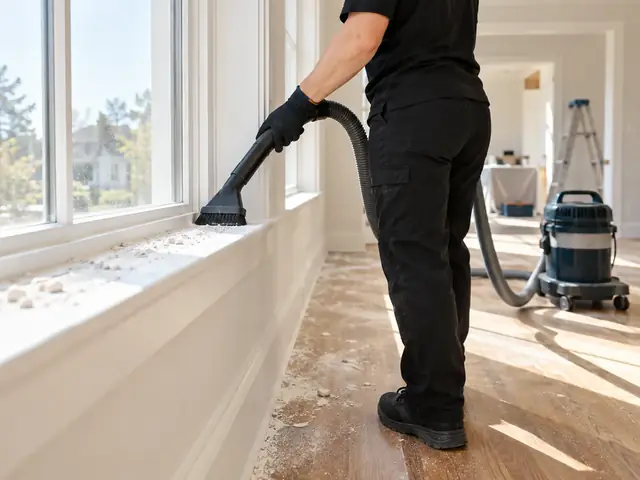
To get rid of drywall dust, wait for it to settle, then HEPA-vacuum every surface top to bottom, wipe with damp (not wet) microfiber, clean floors last and replace the HVAC filter. Avoid dry sweeping, feather dusters and household vacuums without good filtration, which put fine dust back in the air. Plan a second, lighter pass a few days later.
Joint compound dust is extremely fine, so it floats, spreads and settles everywhere.
Sanding drywall joint compound creates particles fine enough to drift through doorways, into HVAC returns and onto every ledge. Dry wiping pushes it around; water turns it into a paste. The fix is capture first, then a light damp wipe.
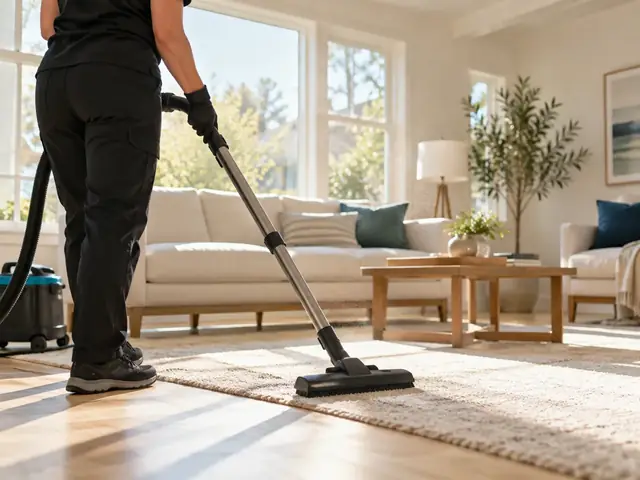
You need a true HEPA vacuum, microfiber cloths, a fine-particle mask, a new HVAC filter and a damp mop.
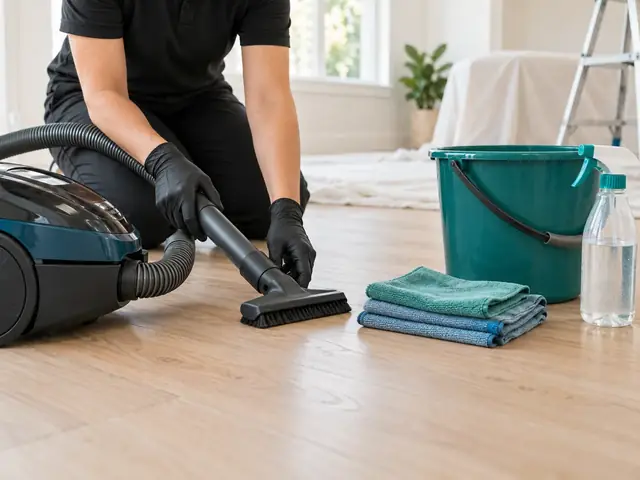
Follow the order; each step protects the next.
Request a quote from a local post-renovation cleaning pro who serves your ZIP code. Free to request, no obligation.
These common moves make it worse.
Every surface gets the same basic approach, HEPA vacuum first and then a barely damp wipe, adjusted to the material.
| Surface | Best method |
|---|---|
| Hardwood floors | HEPA vacuum, then a barely damp microfiber mop |
| Tile and grout | HEPA vacuum, then damp mop; rinse the grout lines |
| Carpet | Several slow passes with a HEPA vacuum; consider professional extraction if heavy |
| Upholstery | HEPA vacuum with the brush tool |
| Painted walls | Gentle HEPA brush or barely damp microfiber |
| Electronics | HEPA brush, then a dry microfiber cloth |
Containment saves hours of cleaning.
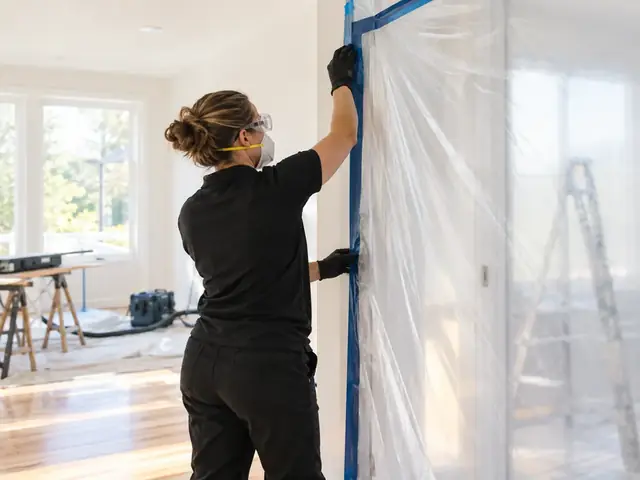
Ask contractors to use zipper doors and plastic sheeting, cover HVAC returns in the work area, use sanders with dust collection and put a sticky mat at the exit of the work zone.
Large remodels, open floor plans and homes with allergies are good reasons.
A post-renovation cleaning crew brings HEPA equipment and a system for the whole home. If your home was built before 1978, read is construction dust dangerous? first.
One room after a small repair can take an hour or two; a whole-home cleanup after a large remodel is a full day or more, often with a team and a follow-up pass.
HEPA vacuum top to bottom, damp microfiber wipe, floors last, replace the HVAC filter and repeat in a few days.
Fine dust can pass through weak filters. A HEPA vacuum is best.
Fine dust keeps settling and circulates through the HVAC system.
Use barely damp microfiber after vacuuming; too much water makes paste.
Wait a few hours for dust to settle, then clean, and repeat in a few days.
Drywall dust comes out with capture, not force: HEPA vacuum first, damp wipe second, floors last and a new HVAC filter. Plan a second pass. For whole-home cleanup, request a quote from a local post-renovation pro.
Get My Post-Renovation QuoteAbout the author
Consultor SEO WendersonSEO consultant and editor of the CleanLocalPros guides
Consultor SEO Wenderson writes the CleanLocalPros house cleaning guides from search data, official sources and the questions homeowners send us, and the editorial team reviews every guide before it is published. We do not accept payment for recommendations. More about the author · Our editorial standards.
Scope and pricing vary by pro, state and city. This guide explains common practice; confirm the details with the pro you hire.
Keep reading
Why fine dust keeps reappearing after a remodel, and a simple plan of cleaning passes and filter changes that finally ends it.
Stop dust from settling after a remodelMost construction dust is a nuisance, but some is a real hazard. Here is how to tell the difference and what that means for cleanup.
Learn when construction dust is hazardousContractors, builders and owners often disagree about the final clean. Here is what contracts usually say and how to avoid the argument.
See who cleans up after constructionSend one free request and request a quote from a local post-renovation cleaning pro who serves your ZIP code.