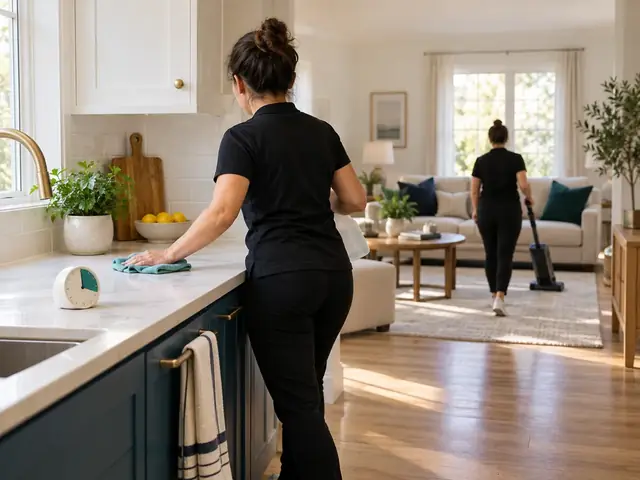
How Much Does House Cleaning Cost?
The factors that set the price of a clean, why quotes change from state to state, and how to compare two quotes fairly.
See what drives cleaning pricesWhat an hourly cleaning rate pays for, why it changes by state and by type of business, and how to compare hourly and flat quotes.
 Consultor SEO WendersonSEO consultant and editor of the CleanLocalPros guides8 min readReviewed by the CleanLocalPros editorial team
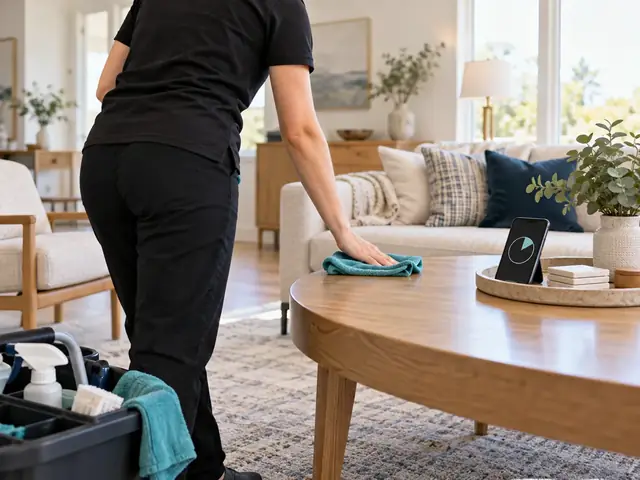
A fair hourly rate for house cleaning is one that covers the cleaner’s wages, taxes, insurance, supplies and travel in your local market. Rates vary widely by state and by whether you hire an insured business or an individual. Judge an hourly quote by the estimated total hours and what is included, not by the rate alone.
An hourly rate is not the cleaner’s take-home pay; it is the cost of running a small service business divided by billable hours.
When a cleaning business quotes an hourly rate, that number has to cover much more than the time the cleaner spends in your home:
That is why an hourly rate that looks high next to a typical wage is often reasonable, and a rate that looks very low often means something is missing, usually insurance.
Cleaning rates follow the local cost of labor and living, so the same service is priced differently in different states and cities.
In areas where wages, rent and insurance cost more, cleaning rates are higher. Demand matters too: in places with many busy, dual-income households and few available cleaners, rates rise. Rural areas can have lower rates but longer travel distances, which some businesses add as a trip charge.
This is why a rate that is normal in one ZIP code can look expensive or suspiciously cheap in another. Compare quotes from the same area.
Who you hire changes what the hourly rate includes.
| Option | What the rate typically includes | Watch for |
|---|---|---|
| Insured cleaning business | Insurance, bonding, supplies, backup staff, a manager to call | A higher rate, but less risk if something breaks |
| Independent cleaner | Labor and often supplies | Insurance, reliability and what happens if they are sick |
| App or marketplace | Labor, with platform fees built in | Who is responsible for damage, and whether you get the same cleaner |
Neither is always better; hourly suits small or unpredictable jobs, and flat rates make comparison easy.
An hourly quote shifts the risk of a long job to you. A flat quote shifts it to the cleaner, which is why flat quotes usually come after more questions about your home. To compare the two, turn the hourly quote into a total: rate times estimated hours times the number of cleaners.
| Hourly | Flat rate | |
|---|---|---|
| You know the total before the visit | No, only an estimate | Yes |
| Easy to compare between cleaners | Harder | Easier |
| Good for | Small jobs, add-on tasks, unusual homes | Standard, deep and move-out cleans |
| Risk if the job runs long | You pay more | The cleaner absorbs it |
A fair hourly quote is explained, not just stated.
Request a quote from a local house cleaning pro who serves your ZIP code. Free to request, no obligation.
Hours only make sense next to a task list.
A cleaner working for two to four hours can complete a standard clean of a small-to-medium home in good condition, but not a deep clean of a large home with heavy buildup. If you are buying a fixed block of time, prioritize the rooms that matter most. See what a cleaner should do in 3 hours for a room-by-room time budget.
Think of an hourly rate as a stack of costs, with the cleaner’s pay as the biggest layer but not the only one.
| Layer | What it pays for | Why it matters to you |
|---|---|---|
| Cleaner pay | The wage of the person in your home | Fair pay keeps good cleaners and lowers turnover |
| Payroll taxes and benefits | Employer taxes, sometimes paid time off | Signals a legitimate employer business |
| Insurance and bonding | Liability coverage and a surety bond | Protects you if something breaks or goes missing |
| Supplies and equipment | Products, microfiber, vacuums, filters | Consistent results without using your supplies |
| Travel and scheduling | Drive time, fuel, booking and support | Reliability and someone to call |
| Business margin | Keeping the business open | A cleaner who is still in business next year |
When a rate looks too low, one of these layers is usually missing. Most often it is insurance or payroll taxes.
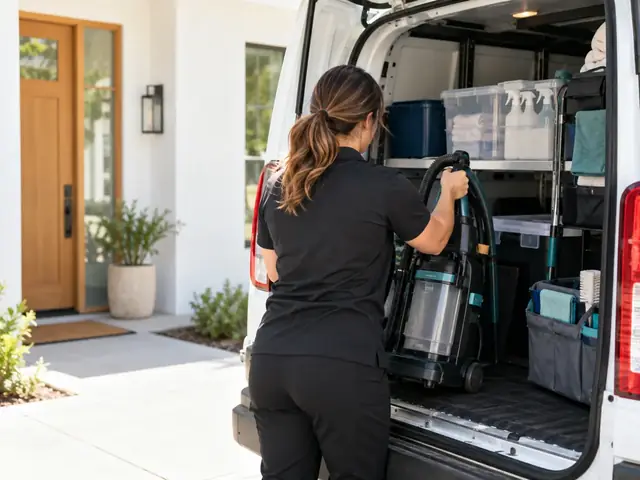
Many businesses set a minimum visit length or charge a trip fee for small jobs.
Travel time is a real cost that is not billed by the hour on site. To make short visits viable, businesses often require a minimum number of hours per visit, charge a flat minimum, or add a trip charge outside their core area. These are normal. Ask about them before you book a small job.
Check whether an hourly rate is for one cleaner or for the whole team.
Two cleaners working for two hours are four labor hours. Some businesses quote per cleaner-hour, others per team-hour. The difference can double a total. Always ask: "Is that rate per person, and how many people will come?"
Five questions turn an hourly rate into a number you can compare.
Hourly works best when the job is hard to define up front.
Organizing a garage alongside cleaning, cleaning around an active household, or tackling a few specific tasks rather than a full checklist are all good fits for hourly pricing. For a standard, deep or move-out clean with a known scope, a flat quote is usually easier to judge.
Wages, taxes, insurance, supplies, equipment, travel and the unbillable time of running a business, not just the cleaner’s pay.
They carry insurance, bonding, payroll costs and backup staff, which protect you if something goes wrong.
Flat rates are easier to compare; hourly suits small jobs. Convert hourly quotes into an estimated total before comparing.
Tipping is optional. See how tipping a house cleaner works.
It depends on size, condition and team size. Ask each cleaner for an estimate with the quote.
A fair hourly rate covers the real cost of a safe, insured, reliable cleaner in your area. Ask for estimated hours, what is included and proof of insurance, then compare totals. To get a quote from an independent local business, request house cleaning.
Get My House Cleaning QuoteAbout the author
Consultor SEO WendersonSEO consultant and editor of the CleanLocalPros guides
Consultor SEO Wenderson writes the CleanLocalPros house cleaning guides from search data, official sources and the questions homeowners send us, and the editorial team reviews every guide before it is published. We do not accept payment for recommendations. More about the author · Our editorial standards.
Scope and pricing vary by pro, state and city. This guide explains common practice; confirm the details with the pro you hire.
Keep reading
The factors that set the price of a clean, why quotes change from state to state, and how to compare two quotes fairly.
See what drives cleaning pricesA realistic time budget for a cleaning visit: what fits in two, three or four hours, and how to spend a fixed block of time where you will notice it.
See a room-by-room time budgetA practical way to decide whether paying for house cleaning is worth it for your household, based on hours saved and what that time is worth to you.
Decide if house cleaning is worth itSend one free request and request a quote from a local house cleaning pro who serves your ZIP code.